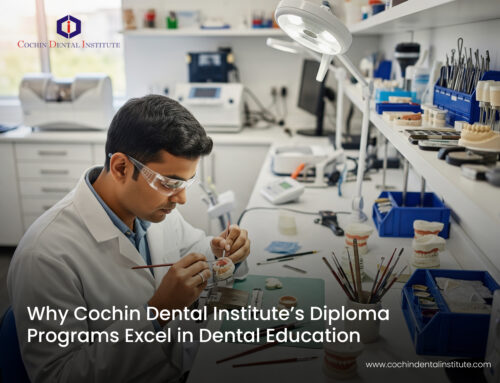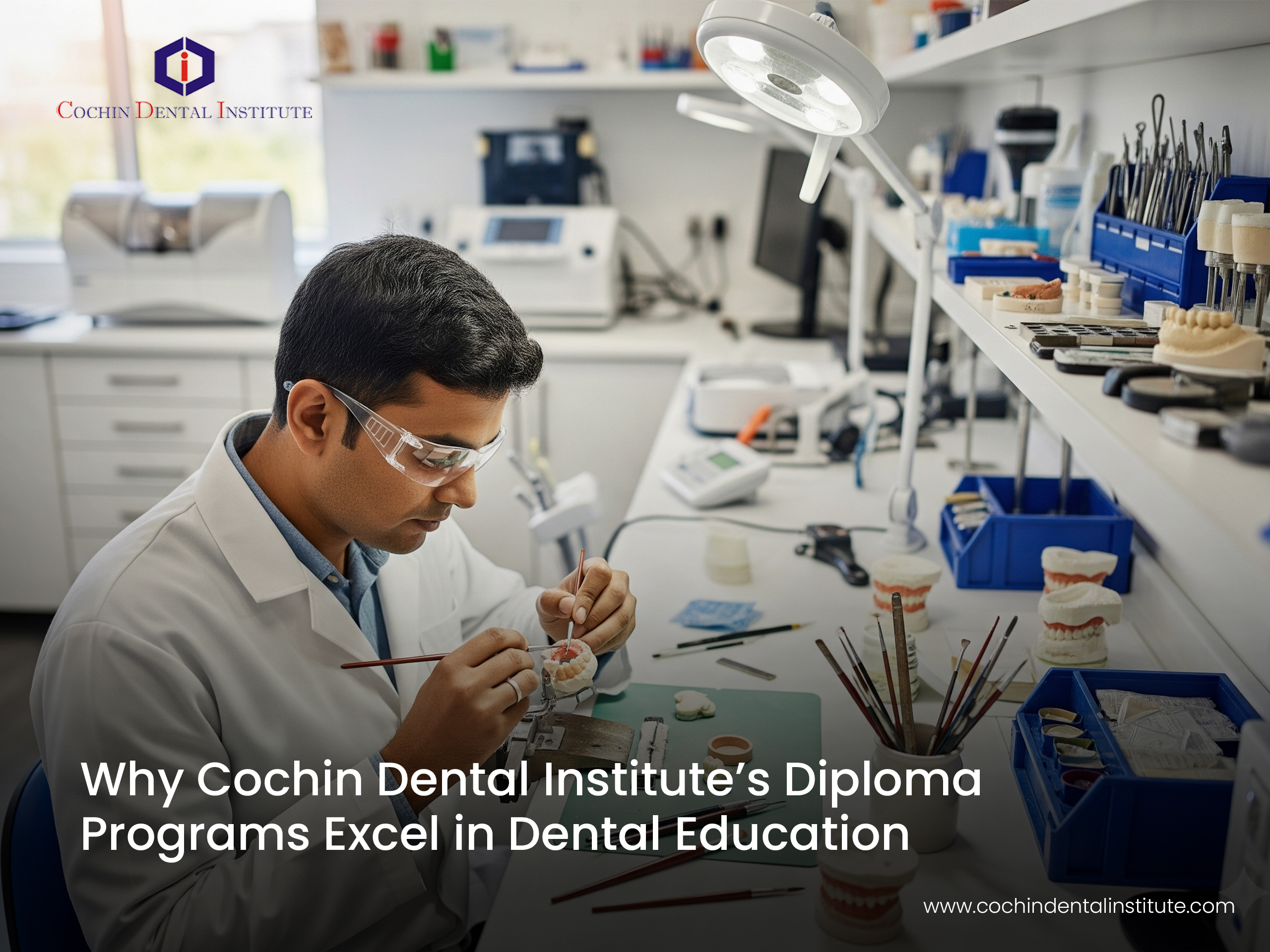
The landscape of dental technology education is rapidly evolving to meet the growing demands of modern dentistry. Traditional degree pathways are now complemented by specialized vocational programs that seamlessly blend theory with hands-on skills. At the forefront of this shift is Cochin Dental Institute, which has redesigned its curriculum to emphasize work‑integrated learning and industry‑aligned training. In this post, we’ll dive into the core features of the three‑year Diploma of Vocation (D.Voc) and Bachelor of Vocation (B.Voc) programs in Dental Technology, helping you decide which path best matches your academic background and career aspirations.
Understanding Vocational Education in Dental Technology
What Is a Work‑Integrated Learning Program (WILP)?
- Industry‑Driven Curriculum: WILP embeds employer requirements into every aspect of coursework, ensuring graduates leave with in‑demand skills.
- Balanced Education: Alongside practical modules, students study general education topics—communication, ethics, environmental awareness—to develop well‑rounded professionals.
- On‑the‑Job Training (OJT): Approximately 70% of each semester is devoted to hands‑on work in dental laboratories and clinics, under expert supervision.
Benefits of Vocational Education
- Real‑World Practice: Apply theoretical concepts immediately in a professional setting.
- Earn as You Learn: Gain stipends or stipends plus placement assistance while studying.
- Tool Familiarity: Daily use of industry‑standard instruments—from model trimmers to digital scanners—builds confidence on day one of your career.
- Professional Soft Skills: Early exposure to workplace norms fosters punctuality, teamwork, and ethical responsibility.
- NSQF Alignment: Integration with the National Skills Qualification Framework boosts employability and validates your competencies nationwide.
D.Voc in Dental Technology: Program Overview
Eligibility and Duration
- Entry Requirement: Completion of 10th standard.
- Program Length: 3 years, split into six semesters.
- Age Minimum: 18 years.
Curriculum Structure
- Semesters 1–2: Foundational techniques—model preparation, wax build‑up, basic dental anatomy.
- Semesters 3–4: Introduction to CAD‑CAM workflows, investing and casting procedures, metal finishing.
- Semesters 5–6: Ceramic layering, removable partial dentures (RPD) fabrication, and infection control protocols.
Key Components
- Dental Materials Science: Ceramics, alloys, and polymers used in prosthetic fabrication.
- Dental Mechanics: Metal‑ceramic and metal‑free prosthesis production methods.
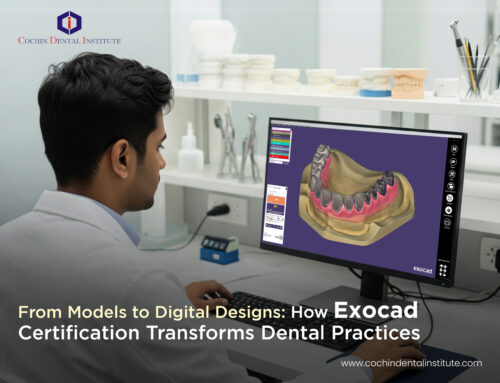
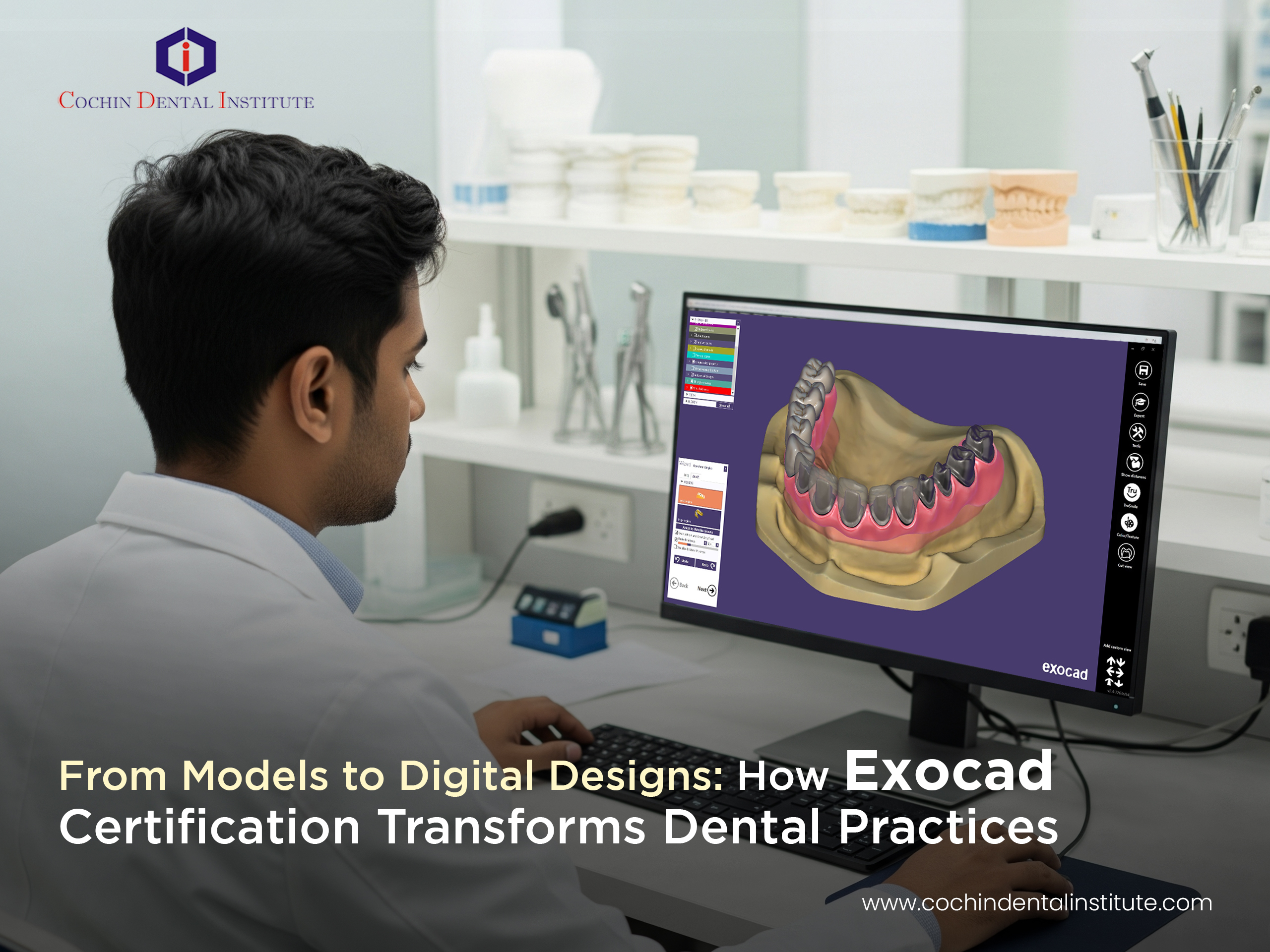
- Digital Workflow Integration: Hands‑on sessions with Exocad software, 3D scanning, and milling setup.
- Infection Control: Sterilization techniques, safety standards, and lab hygiene best practices.
Career Pathways
Graduates can step directly into roles such as:
- Dental Ceramist
- Dental CAD Designer
- RPD Technician
While D.Voc does not offer formal exit points before three years, students may pursue lateral entry into Year 2 of the B.Voc program upon completion.
B.Voc in Dental Technology: Program Overview
Eligibility and Duration
- Entry Requirement: Completion of 12th standard (any stream).
- Program Length: 3 years, six semesters.
- Age: No upper or lower age limit.
Curriculum Structure
- Year 1: Broad exposure—model prep, wax work, investing, casting, metal processing, CAD‑CAM, and ceramics.
- Year 2: Advanced fabrication—complete dentures, cast partial frameworks, orthodontic appliance production, continued digital integration.
- Year 3: Specialized modules—implant prostheses, precision attachments, maxillofacial prosthetics, and advanced Exocad design for implant‑supported work.
Key Components
- Advanced Materials Science: In‑depth study of specialized alloys, high‑performance polymers, and ceramic systems.
- Comprehensive Dental Mechanics: From fixed to removable and implant‑based restorations.
- Digital Workflow Mastery: Full suite Exocad training—crowns, bridges, implant cases, and digital articulation.
- Enhanced Infection Control: Protocols for cross‑infection prevention in complex lab environments.
Multiple Exit Options
- After Year 1 – UG Certificate: Qualifies you for basic CAD design and ceramist roles in fixed prosthodontics.
- After Year 2 – UG Diploma: Opens roles in fixed and removable prostheses, orthodontics, and CPD workflows.
- After Year 3 – B.Voc Degree: Full professional scope—ceramist, orthodontic technician, denturist, implant technician, or maxillofacial prosthetics specialist.
Key Differences Between D.Voc and B.Voc
| Aspect | D.Voc | B.Voc |
|---|---|---|
| Minimum Qualification | 10th standard | 12th standard (any stream) |
| Learning Curve | Gradual skill build-up over 3 years | Accelerated coverage with early exposure to advanced topics |
| CAD-CAM Integration | Starts in Year 2 | Integrated from Day 1, with progressive complexity |
| Exit/Lateral Entry Options | Single exit at 3 years; lateral entry into B.Voc | Three formal exit points (Certificate, Diploma, Degree) |
| Career Readiness | Entry-level technician roles | Wider range from entry-level to specialized technical roles |
Factors to Consider When Choosing
- Educational Background:
- Completed only 10th? D.Voc is your gateway.
- Passed 12th? B.Voc accelerates your journey with higher credentials.
- Career Goals & Timeline:
- Seeking quick workforce entry? D.Voc’s focused diploma may suit you.
- Aiming for specialized roles or higher education? B.Voc lays a stronger foundation.
- Learning Pace Preference:
- Prefer step‑by‑step progression? D.Voc’s structured ramp‑up is ideal.
- Ready for intensive, fast‑track learning? B.Voc’s immersive model fits.
- Long‑Term Plans:
- Want to eventually pursue postgraduate studies? B.Voc provides direct eligibility.
- Considering lateral entry into degree programs? D.Voc smoothly transfers into B.Voc Year 2.
Industry Collaboration and Placement Support
- 70% On‑the‑Job Training: Both programs emphasize real‑world experience under seasoned dental technicians.
- NSDC & NSQF Alignment: Curricula co‑developed with AISECT Skill Knowledge Partnership to meet national competency benchmarks.
- 100% Placement Assistance: Eligible students receive dedicated support, with alumni positioned across dental labs in India and abroad.
- UGC‑Recognized Credentials: All certifications are backed by a UGC‑affiliated university, ensuring nationwide acceptance.
- Additional NSQF Certifications: Optional add‑ons reinforce core competencies and expand employability in public and private sectors.
Conclusion
Both the D.Voc and B.Voc programs in Dental Technology at Cochin Dental Institute are designed to close the gap between classroom theory and the demands of modern dental laboratories. Your choice hinges on your current qualifications, career timeline, and preferred learning pace.
Whichever path you select, Cochin Dental Institute ensures you graduate with both confidence and competence—ready to make your mark in the dynamic world of dental technology.